Responsible tourism is a mandatory practice
Essential to remember
Responsible tourism means traveling while minimizing your negative impact : favoring trains over short domestic flights, consuming local products, staying with locals, refusing single-use plastic, respecting wildlife. A mindset as much as a practice.
You arrive in a new place, you want to see beautiful landscapes, have good memories, your predecessors want the same and so do those to come ! To keep this environment “Clean,” that is to say “Healthy,” there is a whole set of rules to follow !
Every action you take will be a gesture for the planet and for your future children, so in my opinion, ecology is important !
  ;After traveling to more than a dozen countries, I have seen the good and the bad. Imagine yourself on an almost deserted island with landscapes of incredible beauty like you have never seen before ! When suddenly, you step on a piece of glass and hurt your foot, your stay will be disrupted and less enjoyable !
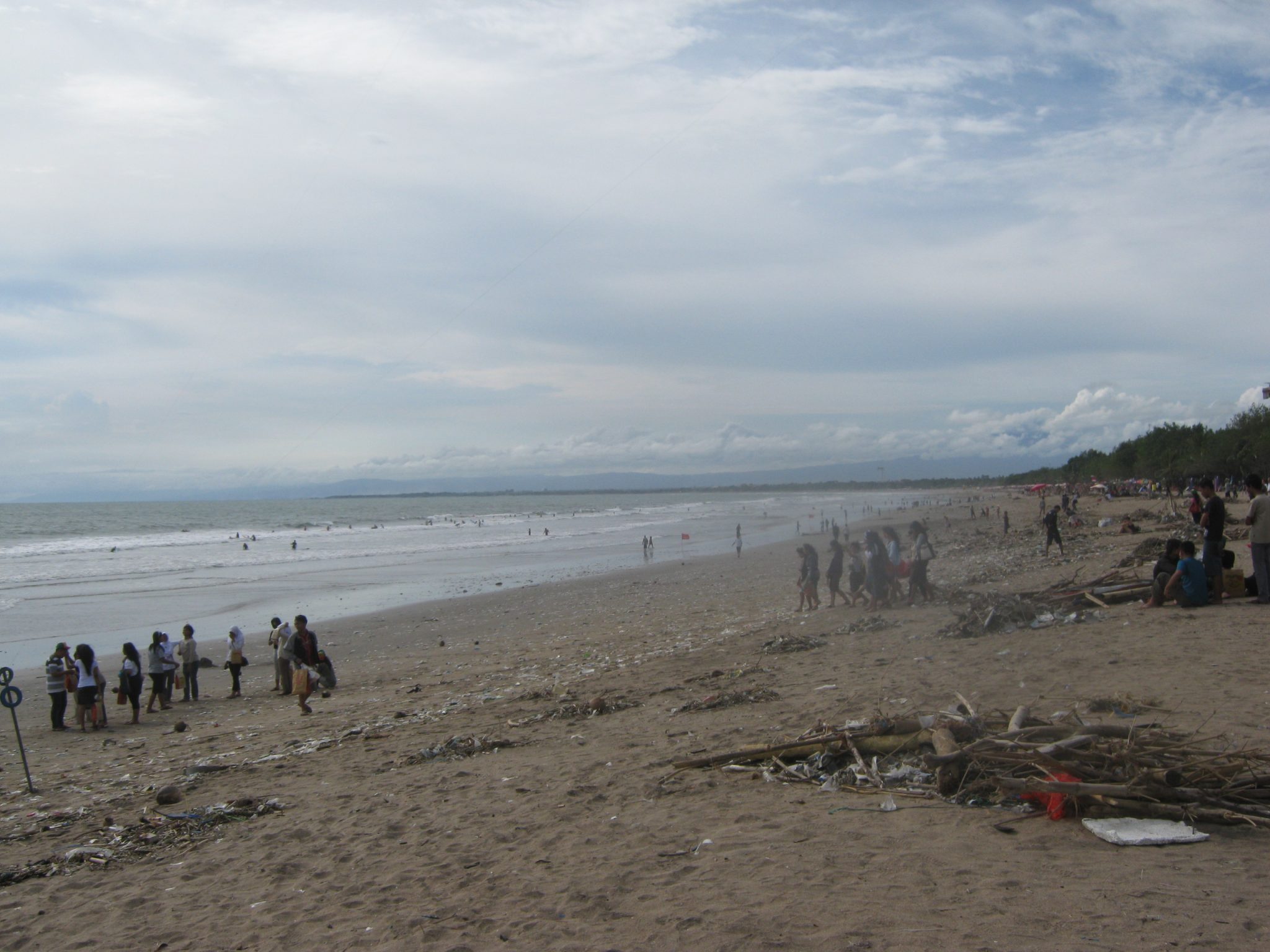
  ;An anecdote for the story: I was in Indonesia in Bali, a tropical paradise with postcard-perfect beaches. I was walking on the beach and everything was dirty to my surprise !
Did you know?
According to the UNWTO, tourism accounts for 8 % of global CO2 emissions, of which 75 % come from transportation. A single round-trip flight Paris-NYC emits as much CO2 as a French person does in 6 months for all their daily travel.
Being a responsible tourist also means using resources sparingly ! Some resources are often scarce, and travelers do not realize that they can impact the local ecology through waste, water management, and usage !
  ;Responsible tourism: The advice to follow
  ;Natural environments must be preserved without impacting nature :
My experience
For 5 years, I have avoided intra-European flights under 1,500 km when the train is possible. Paris-Marseille by TGV, Berlin-Vienna by night train: you gain comfort, reduce your footprint, and the travel experience is more immersive.
– Be careful to save water, water is quite precious and the demand for water often exceeds supply! Do not stay in a hotel with a pool, especially if you have the sea within arm’s reach!
  ;– Don’t buy too many bottles, they accumulate quickly! I once found myself in Indonesia on a coastline during a half-day excursion swimming with my friends among the plastic bottles that were accumulating there because of the current, it is very unpleasant to tell you! Ask to fill your bottle in a place where there is drinking water if they have one! If you are not confident with this water, you can always use disinfectant tablets.
| Practice | Impact |
|---|---|
| Train vs plane (Europe) | -90 % CO2 |
| Staying with locals | Strengthened local economy |
| Reusable water bottle | -300 plastic bottles/year |
| Eating local | -30 % food CO2 |
| Small groups (vs coaches) | Less local pressure |
– Save electricity, do not leave the air conditioning running and do not leave the light on when you go out! Open the window at night!
Advantages
- Reduction of carbon footprint
- More authenticity in travel
- Support for local economies
- Slower and deeper discovery
- Feeling of personal coherence
Weak points
- Cheaper flights so tempting
- Long and expensive international trains
- Carbon offsetting difficult to verify
- Mass tourism difficult to avoid
- Sometimes higher cost
– Use transportation means, as a traveler, it is always quite nice to live like a local! Do not overconsume, take your time, you are on vacation!
  ;– Do not feed animals, when you camp or go to rest areas, there are often animals lurking attracted by the smell of food! Do not feed them because they will get used to it and the image of humans would be that of food for them, they could become aggressive towards you!
  ;Responsible tourism if you go Trekking:
The classic trap to avoid
Beware of the “greenwashing” of large hotel chains that claim to be “eco-responsible” based on a simple removal of the plastic cup. Check the real certifications: Green Globe, EarthCheck, European Ecolabel.
– Respect nature, one of the rules of the hiker is to leave no trace of man in natural environments!
  ;– Never bury your waste, some waste takes years to decompose and digging worsens erosion! It could even injure animals if it were to be unearthed!
Along the same lines, the article on traveling economically provides useful insight. Our feedback on eco tourism also gives good leads, and the guide dedicated to tourist offices nicely completes the picture.
  ;– Avoid all packaging and only bring what you need, favor everything biodegradable, canvas bags, etc…
  ;– Gather human waste in a bag, including excrement as it can contaminate water sources and cause all kinds of infections! Prefer natural toilets or dig a hole at least 15 cm deep and at least 100m from the water source!
Along the same lines, the article on traveling economically provides useful insight. Our feedback on eco-tourism also gives good leads, and the guide dedicated to tourist offices nicely completes the picture.
How to travel more responsibly?
Train > plane, fewer destinations over more time, stay with locals, eat local, reusable water bottle.
Should we stop flying?
No, but limit short-haul flights (where train is possible) and offset carbon through verified projects (Gold Standard).
What is greenwashing?
A marketing strategy that presents an activity as ecological when it really is not. Very common in tourism.