Health while traveling is a very important factor to consider when traveling abroad or on a world tour. In this article, I will talk to you about the different travel insurances and give you health advice to help you avoid some preventable problems.
📋 The essentials to remember: A decent travel insurance costs 1 to 3 € per day and covers medical expenses abroad, repatriation, baggage theft, and cancellation. For a short stay in Europe, a credit card is often sufficient. For travel outside the EU, a long stay, or a world tour, take out dedicated insurance (Chapka, ACS, AVI). Repatriation alone can amount to 30,000 € from Asia.
I will also compare different travel health insurances to guide you in subscribing to insurance that fits your profile. Here is my opinion on travel insurances.
Travel insurance comparison: How to choose?
Why take out travel insurance abroad?
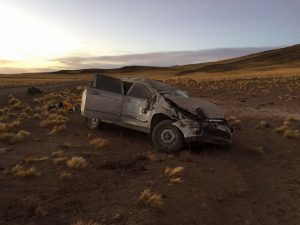
I am currently in France and the reason I am writing this article is that during my last month of traveling around the world (2 years) at the most unexpected moment, I had a car accident in Chile in a desert. More worry than fear, I came out almost unscathed from this accident but this was not the case for the other people who were with me.
During my year in Australia, I had taken out a working holiday visa insurance for one year and nothing happened to me. During this world tour, I had not taken travel insurance and to be honest, I could have regretted it.
During my accident in Chile, two people out of the 5 in the car were hospitalized, including a girl who had a surgery that cost her 20,000 euros, luckily she had insurance. The other person was hospitalized and operated on for less than 10,000 euros. I can’t imagine how much it would have cost in the USA.
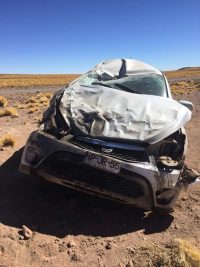
Photo of the accident car
What you need to know is that an accident can happen very quickly, a fight, a slip, a scooter accident in Asia, etc.
- So in my case, it happened due to a loss of control of the car, waiting for the ambulance, arrival at the emergency room, a series of tests to check if I had internal bleeding (several scans, blood tests, urine tests, pulse check). Fortunately, emergency care is covered by the state in Chile in case of an accident but if the accident had happened in another country, it would have been the end of my world tour.
Recently, there was a fight at my hostel in Brazil, result: an accident and back surgery because he fell from a height. Anything can happen while traveling!!
🌍 Did you know?
A medical repatriation from Asia can cost between 30,000 and 80,000 € depending on the condition and the need for a medicalized plane. From Australia or South America, these figures often go higher. No standard credit card covers this amount.
Travel insurance offers you coverage:
- in case of repatriation of the body or repatriation for hospitalization,
- in case of theft,
- in case of a death in your family or if a family member has an emergency, you can request a refund for the round-trip ticket.
- civil liability,
- actual or non-actual medical expenses,
- travel cancellation insurance depending on the case or travel cancellation
- and many other things depending on the insurance you take (multi-risk, extreme sports insurance, computer equipment, etc.).
Taking a travel insurer also allows you to give peace of mind to your family if something happens to you during your trip. Don’t forget if you are going far away, do not give your family more worries than they already have.
There is a section on a travel health insurance comparison at the end.
Photo of the car after my accident in Chile
You can spend less money on accommodation or even on transportation but the expense you clearly must not forget is the globetrotter travel insurance.
Here is one of my articles on how to spend less on a world tour.
Here is a video explaining how travel insurance works and how it goes for all companies.
| Insurer | Type | Medical ceiling | Indicative price |
|---|---|---|---|
| Chapka Cap Aventure | Short duration worldwide | €500,000 | €1/day |
| Chapka Cap Trip Premium | Family / cancellation | €1,000,000 | €1.5/day |
| ACS Globe Partner | Long stay | Unlimited | €32-45/month |
| AVI Marco Polo | World tour | €500,000 | €30/month |
| Visa Premier / Gold | Bank card | €155,000 (max 90 days) | Included |
What you need to know before taking your travel health insurance?
You may already have health / travel insurance:
- On your Visa “Premier” blue card or “Gold Mastercard”: It is valid for 90 days from your first day of travel. It works like a standard travel insurance but the coverage limits are significantly lower. For everyday issues, it can help you but if you have a major accident, you will have to pay out of pocket unless you have travel insurance. Each bank card offers different limits, it’s up to you to see what you have. Personally, I had a Visa Premier card from Société Générale because I had subscribed to an international package with them, you should always check the contract with the limits.
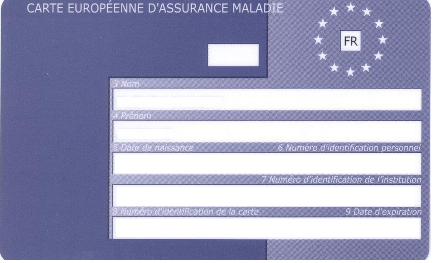
- You are covered in Europe because you are a French citizen. You are covered by the French social security but you will need to request the European Health Insurance Card (EHIC) to benefit from the coverage of medical expenses (actual or not). Depending on the country you are in, you may or may not have to advance the medical costs. If you do not have your card, you can request reimbursement of your expenses after your return from the trip. Here is the link to request the EHIC Card to be covered in Europe for a holiday trip. It is not necessary to take holiday insurance in Europe within the Schengen area for example.
Get to know better what travel insurances offer
The price of travel insurance varies according to several parameters:
- The age of the member, and the number of people: single, a couple or a family.
- The duration of social coverage.
- The countries you visit, generally, Europe, countries worldwide excluding Canada and USA, or all countries worldwide.
Most insurance contracts offer these guarantees but it is better to compare travel insurance:
- Medical expenses abroad: When you are sick and go to the doctor, you are insured. You are also insured if you have dental expenses and complications related to pregnancy, hospitalization costs, and reimbursement for medication. There is no coverage for chronic illness or illnesses you contracted before taking out the insurance.
In the case of a long hospitalization or a serious accident, costs can quickly add up. During my car accident, one of the passengers had an accident that led to spinal surgery in Chile. It cost her several tens of thousands of euros just for the operation because they put a titanium rod in her back.
- Assistance and repatriation: If you have an accident or your death results in your repatriation, you are covered. Each insurance has its own limits. You need to carefully review each insurance to know what it covers.
For example: If there is a death or a long-term hospitalization case in your family, they can pay for a round-trip ticket. This happens more often than expected.
- Liability insurance: This part of the insurance covers you in case of bodily injury or property damage (home) to a third party. It also covers you legally (advance bail or lawyer fees).
For example, if you get into a fight with someone and seriously injure them. They have to go to the hospital because of you, you are insured if you have to pay their hospital fees or if they sue you.
- Lost luggage insurance, in case of loss, theft or damage: You carry valuables in your luggage and they get lost, you are insured up to a certain amount. Don’t forget to ask for a document in case of an incident to have proof.
Warning: most companies insure your electronic equipment only up to a certain amount (usually a few hundred euros), the same goes for passport theft or identity card loss.
- Extreme sports insurance depends on the insurance you take. You may or may not be insured for activities such as scuba diving, paragliding, or bungee jumping, for example. If you practice these activities, it’s better to have insurance that covers you because accidents can be very costly.
You have an accident while scuba diving that results in a disability, a problem with your eardrums depending on your insurance, you may not be covered for the costs.
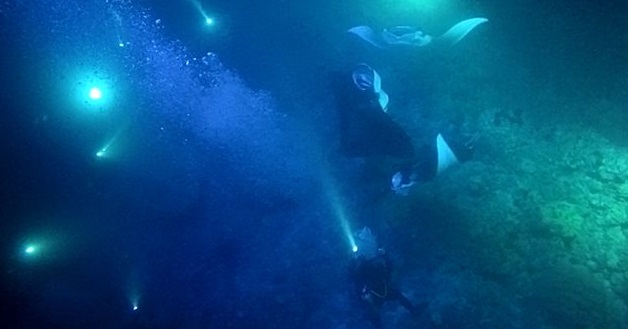
Scuba diving at Big Island in the Hawaiian archipelago
Choosing and comparing different travel insurances
🗣️ My experience: In Thailand, a friend broke his leg on a scooter in Koh Phangan. Without insurance, the initial bill was around €12,000 for treatment, hospitalization, and repatriation in a medical business class. Fortunately, he had taken Chapka: everything was covered without advance payment, except for a €45 deductible. Since then, I never travel without proper coverage.
In this section, I will create a travel insurance comparison to help you know which one is right for you. Knowing that I cannot compare every type of travel health insurance (AVI, World Nomad, ACS, Chapka, and many others), I have only included the general conditions of insurance for a round-the-world trip or a trip longer than 3 months.
-
AVI Round-the-World Insurance:
This is the travel insurance recommended by the Routard guide. There are several types of insurance: the main insurances are the one for your Marco Polo round-the-world trip, the one for short-term backpackers, and the one for working holiday visas.
Prices start from €29/month for insurance within the European Union and from €49/month for worldwide insurance excluding USA/Canada, for example. (2018 prices)
The particularity of AVI Insurance is that it covers:
- Leisure and holiday sports (excluding extreme sports). If you go play football and something happens to you, you are insured.
- The guarantees are the same or superior to Chapka’s. €300,000 for medical expenses versus €200,000 with Chapka. Death benefit of €15,000 (versus €12,000) or disability of €75,000 (versus €50,000).
The advantage of this insurance is that the coverage limits are higher than Chapka’s, but the disadvantage is that it is more expensive.
If you want to see the insurance in more detail, here is the link on the image:
Here are the general sales conditions for Avi for the Marco Polo insurance (the one you should take for a round-the-world trip). You should read these contract conditions to know what you are insured for before subscribing.
-
Chapka Insurance:
There are many different insurances: there is insurance for trips under 3 months, for round-the-world trips, for working holiday visas, etc.
🍀 Dedicated insurance (Chapka, ACS…)
- High coverage limits (€500,000 and above)
- Direct coverage without advance payment
- Risky sports/activities included (options)
- 24/7 hotline in French
🔻 Bank card (Visa Premier/Gold)
- Limit 90 days per trip
- Low coverage limit (~€155,000)
- Advance payment often required
- Extreme sports excluded
For the most basic insurances, prices start at €29/month for stays in Europe but unlike AVI, there are round-the-world insurances starting at €46 per month for the worldwide zone excluding USA/Canada.
The particularity of Chapka Insurance is that it covers:
- For emergency dental expenses (up to 600 euros compared to 150 euros for AVI).
- Coverage for many sports including scuba diving (up to 40 meters), often requiring an additional fee for this option with other insurances.
- There is also baggage insurance during transport and throughout your entire stay. Most insurances only cover baggage during transport.
- It is an insurance broker who works with Mondial Assistance, Axa Assistance, or Europ Assistance to get insurance at the best price.
Chapka’s Cap Working Holidays Insurance:
If you want to see the insurance in more detail, click on the comparative table with pricing:
- The one for your trip around the world or your trip of more than 3 months starting from 36 € which is Cap aventure (the one I presented above, 2018 price). This represents an investment of about 400-500 euros for a year but when you go hiking, do physical activities, rent a scooter in Asia, go to a tropical forest, eat exotic food, these are risk factors and it is better to be prepared for any eventuality, from food poisoning, or scooter accident, or even exotic disease. You can be stuck in the hospital for several weeks and if you have insurance, you will have peace of mind. It is a good travel around the world insurance.
- The one for your working holiday visa, an insurance PVT starts from 36 €: It is a comprehensive insurance that offers you coverage during your holidays or when you work, covering you worldwide, it also covers risky sports. I took a PVT insurance during my stay in Australia for example with a health coverage ceiling that offers good security.
- The one for your expatriation, the expatriate insurance starts from 56 €: perfect for those who want to work or want to start a business abroad. It covers you in case of illness, the ceilings are unlimited for medical expenses.
- The one for your volunteering abroad starting from 31 €: It covers you whether in your work or when you travel abroad. If you are sick, it covers you from the first euro without deductible for medical expenses.
Summary table of travel insurance price comparison:
For each of the insurances the common points are:- Repatriation assistance 7 days/7 24h/24: actual costs or deductible.
- Private life liability abroad: with a ceiling of more than 4 million euros.
- Death capital: 10,000 € // disability capital: ceiling of 50,000 €
- Early return: Round-trip ticket if you are hospitalized or if there is a death in your family.
- Baggage insurance: 2,000 € (loss of baggage during transport), you must make and have a loss declaration.
- Search and rescue costs: 5,000 € for all except 3,500 € for Cap aventure.




Volunteering insurance remains a normal insurance with fewer guarantees than that of the expat and WHV, and you preferably stay in the same place. It is an enhanced health mutual abroad.
The expat and WHV or PVT insurances are made for people who stay long time in the same place with some short-term trips, like a car insurance for rental liability for example for a car.
The Cap aventure insurance is made for those who often change places and covers you well if you have a medical problem.
Here are the general sales conditions for Chapka for Cap aventure insurance (the one to take for a trip around the world), you must read these conditions to know what you are insured for.
Conclusion:
⚠️ Classic trap
Believing that your bank card covers everything. Visa Premier and Gold MasterCard limit coverage to 90 days per trip maximum and generally exclude scooter, diving, high altitude hiking, off-piste skiing. Read your general conditions before leaving, or add dedicated insurance for risky activities.
There are not really major differences between insurances except for the additional options and coverage limits.
The best online insurance does not exist; it depends on your profile.
If I had to choose between Chapka insurance and AVI international insurance: I would choose Chapka insurance because it offers coverage for scuba diving without paying extra fees.
If I were not diving, I might have chosen AVI Marco Polo travel insurance because it offers higher coverage limits.
Why Chapka Insurance:
One of my other preferences is that Chapka international insurance is cheaper and I have had good feedback from their customer service with good travel assistance.
It should also be said that Chapka over time has built a reputation among travelers and professionals as a good insurance and they take travelers’ feedback into account.
That is why I would choose Chapka without hesitation. You can always request a quote for rates and make your decision.
(Update for other insurances such as Mondial Assistance at the end of June 2018)To delve into the topic of a specific insurer, detailed review of Chapka goes into the details of common coverages. reviews of travel insurances provides a broader comparison between several providers. And before subscribing, preparing a long trip helps to review all the logistical aspects of a departure.
Travel anecdotes that could have ended badly without travel insurance.
During the trips I have taken, many stories happened, here are a few:- In 2009, I had been in Tasmania for several weeks and we used to play football in the afternoon. There were arrivals at the campsite where I was living. We invited the newcomers to play with us, in a relaxed atmosphere, we even drank beer during the match. One of the newcomers had an accident that never happens, he stepped on the ball and fractured his ankle. We continued playing thinking it was nothing serious. Result: he returned to France because he wouldn’t have been able to walk for 3 months, he had just arrived in Australia 3 weeks earlier. He had WHV insurance (working holiday visa travel) which covered the ambulance and the plaster cast.
- In 2010 in Sydney, a friend had stomach pains, he went to the hospital, he needed surgery, having no travel insurance, he returned to France urgently to get treatment. The good news is that he managed to get treated but he had come back to France.
- In 2015, an English friend went to India and caught a virus from the food. She was taken to the hospital where she was hospitalized for 10 days and then repatriated to England. She was insured and had to advance the costs but was reimbursed afterwards. Bad luck, it was with her that I had my car accident in June, she was driving (you can see the state of the car above). She was unharmed but while traveling, you can accumulate accidents unintentionally.
Additional questions and my advice to guide you on the travel insurance comparison site
- Each insurance offers more or less the same reimbursement guarantees with some different parameters or options. You must carefully read the general terms and conditions. Choose the travel insurance adapted to your needs.
- If you do risky sports (bungee jumping, scuba diving, bungee jumping, etc.), it is better to take insurance adapted to this need.

- In case of loss of equipment or theft, or medical care, you absolutely need to have a receipt for the care or lost equipment, or a theft report and in some countries, it is often difficult to obtain one. You must insist and be patient.
- If you are already at your destination during your stay, there is a waiting period specific to each insurance of a few days to two weeks. For example, you are in Brazil and you subscribe to your insurance on July 14 and there is a waiting period of 7 days. You will only be insured from July 21.
- If you are going for less than 3 months to a European country, the European card (see above) and the insurance of the Visa “Premier” card or the “Mastercard” may be sufficient. However, if you are going to any other country for less than 3 months, depending on your activities, I advise you to take insurance.
- You are not sure if you will travel for 6 months, 1 year or more. It’s not a problem, you can always extend your insurance once you have left.
And you? What travel insurance do you have for your world tour or your trip of more than 3 months?
Ps: This article contains affiliate links that allow me to earn a little money if you subscribe to world travel insurance for your trip. The price of the insurance remains the same. For the writing, I remained impartial, I included affiliate links for each insurance.