What to do in Guatemala: a nature destination
📋 Key points to remember: Guatemala is one of Central America’s secrets, rich in Maya heritage. My must-sees: Tikal (Maya city in the heart of the jungle), Antigua (UNESCO colonial town), Lake Atitlán (surrounded by 3 volcanoes), Acatenango volcano (trek + bivouac facing the erupting Fuego volcano). Budget 35-50 €/day. Dry season November-April. Allow 10-14 days to fully enjoy.
What to do in Guatemala?
For various reasons, good and bad, Guatemala is not a mass tourism destination – and that’s a good thing. Although not without criticism, major tourist sites like Tikal and Antigua do not have the off-putting character often found worldwide, due to cheap folklore. Above all, beyond the obvious historical and archaeological assets, a trip to Guatemala cannot overlook the many splendid natural destinations. With its 37 volcanoes, lagoons, jungle, Pacific and Atlantic coasts, biosphere reserves, rivers, and mountains, the country is rich and beautiful, delighting all nature lovers. Here is a selection of 5 particularly recommendable natural places in Guatemala.
-
Fuentes Georginas
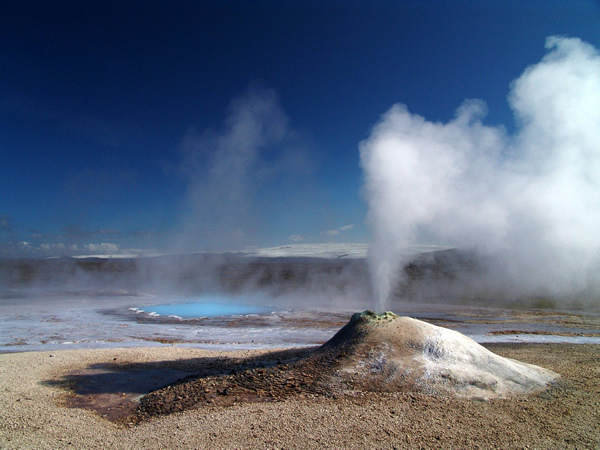
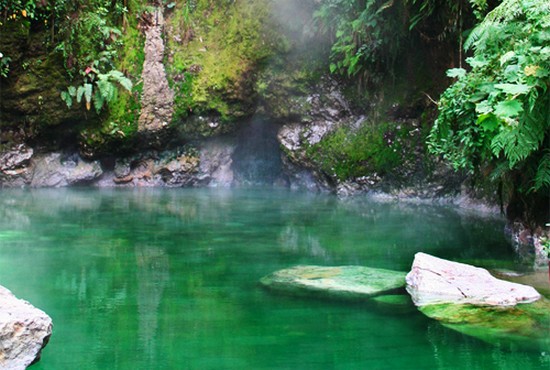
Located about ten kilometers from the country’s second city, Quetzaltenango, Fuentes Georginas are natural outdoor hot springs and a place well known to both travelers and locals – and well deserving of its reputation. These few hot pools – even scalding hot for one of them – situated in the mountains near the village of Zunil, are set in the heart of a lush natural environment with a magnificent view of the valley. Discovered in 1902, these hot springs were regularly frequented by dictator Jorge Ubico in the 1930s; he named them after his wife, Georgina, with whom he visited under police escort. Besides bathing, it is possible to take walks in the surrounding nature, dine there… and even spend the night in one of the bungalows (a bit pricey: 16€/night per person, but for a warm bath under the stars, it’s worth the expense!).
-
The Lagoon Lachuá
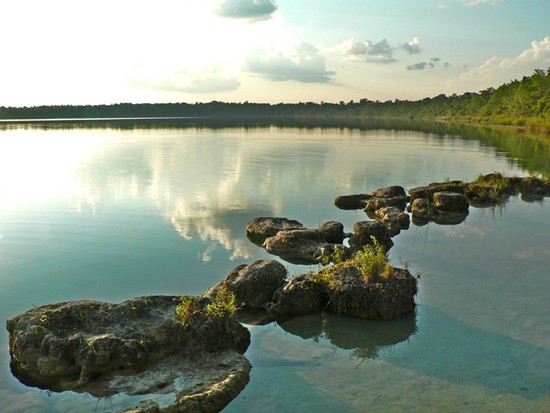
This karstic lake (one might loosely call it a cenote, if it did not mainly evoke the http://www.voyageurs-du-net.com/cenotes-peninsule-yucatan in Mexico) is located in the northwest of the Cobán department. It even gave its name to a national park of the same name created in 1976. The tropical climate, the great biodiversity of this reserve, the crystal-clear water of the lagoon, and the spectacle of nature in its entirety offer visitors enchanting moments. Ideal for two days of camping and relaxation.
🗣️ My experience: The Acatenango trek remains one of the most memorable moments of my travels. A 5-hour ascent to the base camp (3,600 m), camping facing the Fuego volcano, and every 15-30 minutes an eruption in the middle of the night: red-orange lava shooting up 200 m high, in absolute silence. Cost: €60-80 for the 2-day package (guide + meals + tent). Unforgettable.
-
Semuc Champey
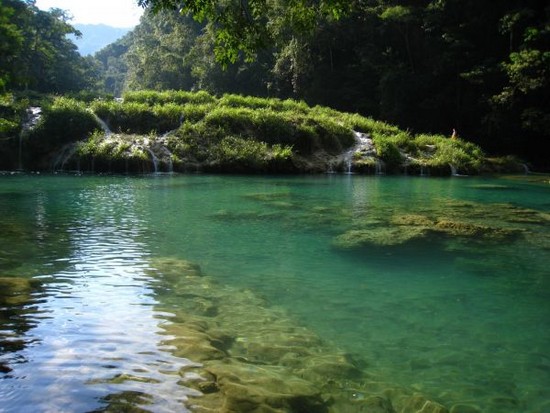
Located in the heart of the country, not far from the town of Lanquín (Alta Verapaz department), it is one of the main tourist attractions in Guatemala. Literally meaning “Where the water hides in the mountain” in the Q’eqchi’ Maya language, Semuc Champey is a series of natural turquoise pools set in a lush vegetation landscape. Viewing them from the overlook, located 50 meters high and accessible after a one-hour walk, guarantees a magnificent spectacle.
🌍 Did you know?
Guatemala has 37 volcanoes, including 3 that are constantly active (Fuego, Pacaya, Santiaguito). Fuego has been erupting almost continuously since 2002, and the Acatenango trek (3,976 m) allows camping 200 m facing its nighttime eruptions (glowing lava every 15-30 minutes). One of the most incredible spectacles in Latin America.
-
The Santa María and Santiaguito volcanoes, and the Santiaguito Viewpoint
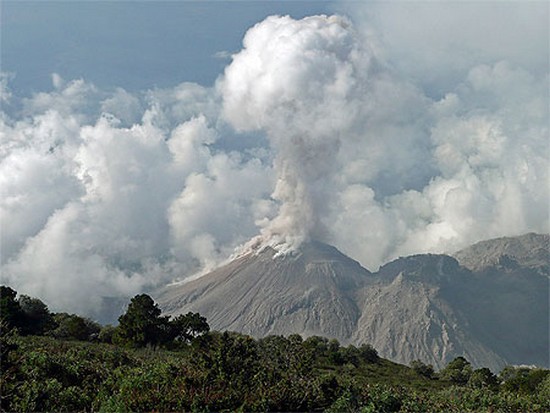
Eleven kilometers from Quetzaltenango lies Santa María, one of Guatemala’s 37 volcanoes, which rises to 3,772 meters above sea level. In 1902, during its last major eruption (one of the most violent of the early 20th century), it gave birth to another volcano: Santiaguito, which reaches 2,570 meters. These two volcanoes, whose ascent is especially recommended for experienced hikers, are popular with tourists and local trekkers. For less experienced hikers, the alternative is the Mirador del Santiaguito, accessible from the village of Llanos del Pinal. There, you can observe volcanic eruptions and admire a breathtaking landscape: on one side, the barrenness of Santiaguito, its fumaroles and craters, and on the other, lush mountain ranges covered with forest.
🍀 Guatemala
- Exceptional Maya heritage (Tikal)
- Unique active volcanoes in the world
- Affordable budget
- Living culture (Mayas represent 50% of population)
🔻 Limitations
- Variable security (caution in cities, outside tourist areas)
- Long journeys on chicken buses
- No direct flights from Europe (stopover in Mexico or USA)
- Intense rainy season (June-September)
-
The Monterrico Mangrove
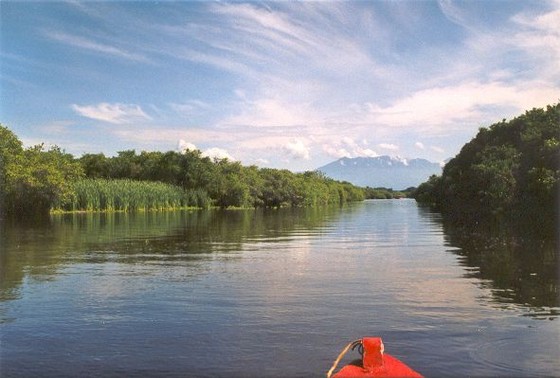
Located on the Pacific coast, south of Guatemala, Monterrico is a small village well known to Guatemalans for its volcanic black sand beaches and its influx of sea turtles. Besides the enchanting atmosphere of its beaches, small hotels, and huts, Monterrico also has a mangrove, located in an ornithological nature reserve. A boat ride early in the morning under the magnificent colors of the sunrise will surely delight nature lovers.
⚠️ Classic trap
Doing the Acatenango without physical preparation. The trek is physical (5 hours of ascent with a backpack, 1,500 m elevation gain, altitude 3,600 m). Many tourists give up halfway. Do sports 2-3 weeks before, acclimate yourself to Antigua (1,500 m) for at least 2 days, and hire a porter if needed (10-15 $).
To expand towards other Central American countries, what to visit in Costa Rica presents the classic neighboring country. Where to go in South America opens up other Latin routes. And for overall travel safety, traveling safely is essential.
[Several of these articles were written based on work done by students – mostly Guatemalans – from the Alliance Française of Quetzaltenango, as part of courses taught by the Travelers of the Net.]
How many days to visit Guatemala?
Is Guatemala dangerous?
Best time to visit Guatemala?
| Step | To see | Duration |
|---|---|---|
| Antigua | UNESCO colonial town, cobbled streets | 2-3 days |
| Acatenango (trek + bivouac) | Volcano + Fuego eruption show | 2 days |
| Lake Atitlán | 3 volcanoes, Mayan villages around | 3-4 days |
| Semuc Champey | Natural turquoise jungle pools | 2 days |
| Tikal | Mayan city, sunrise at the top of Temple IV | 2 days |
| Chichicastenango | Traditional Mayan market (Thu/Sun) | 1 day |