.synthesis { max-width: 640px; margin: 2em auto; padding: 1.5em 1.8em; color: #78350f; font-family: “Inter”, “Segoe UI”, sans-serif; text-align: left; position: relative; box-sizing: border-box; background: #fffaf0; border: 1px solid #b45309; border-left: 6px solid #b45309; border-radius: 8px; box-shadow: 0 8px 24px rgba(251, 191, 36, 0.15); }
.synthesis h2, .synthesis .synthesis-header { font-size: 1.15em; font-weight: 700; margin-bottom: 0.6em; color: #b45309; }
.synthesis p, .synthesis li { font-size: 1em; line-height: 1.65; margin: 10px; }
.synthesis strong { color: #451a03; }
.synthesis table { width: 100%; border-collapse: collapse; }
.synthesis th { background: rgba(180, 83, 9, 0.12); color: #b45309; text-align: left; }
.synthesis td, .synthesis th { padding: 8px 12px; border-bottom: 1px solid rgba(180, 83, 9, 0.18); vertical-align: top; }
.synthesis tbody tr:nth-child(even) { background: rgba(180, 83, 9, 0.05); }
.key-takeaways { max-width: 640px; margin: 2em auto; padding: 1.5em 1.8em; color: #78350f; font-family: “Inter”, “Segoe UI”, sans-serif; text-align: left; position: relative; box-sizing: border-box; background: #fffaf0; border: 1px solid #b45309; border-left: 6px solid #b45309; border-radius: 8px; box-shadow: 0 8px 24px rgba(251, 191, 36, 0.15); }
.key-takeaways h2, .key-takeaways .key-takeaways-header { font-size: 1.15em; font-weight: 700; margin-bottom: 0.6em; color: #b45309; }
.key-takeaways p, .key-takeaways li { font-size: 1em; line-height: 1.65; margin: 10px; }
.key-takeaways strong { color: #451a03; }
.key-takeaways ul { list-style: none; padding-left: 0; }
.key-takeaways li { margin: 0.45em 0; padding-left: 0.2em; }
.mg-callout{margin:1.5em 0;padding:.9em 1.1em;border:1px solid;border-left-width:4px;border-radius:10px;font-size:.97em;line-height:1.65}.mg-callout>:first-child{margin-top:0}.mg-callout>:last-child{margin-bottom:0}.mg-callout__label{display:block;margin:0 0 .35em;font-weight:700;font-size:.82em;letter-spacing:.03em;text-transform:uppercase}.mg-callout__label::before{margin-right:.45em;font-size:1.05em;vertical-align:-.06em}.mg-callout–info{background:#eff6ff;border-color:#bfdbfe;color:#1e3a5f}.mg-callout–info .mg-callout__label{color:#2563eb}.mg-callout–info .mg-callout__label::before{content:”\2139\FE0F”}.mg-callout–tip{background:#f0fdf4;border-color:#bbf7d0;color:#14532d}.mg-callout–tip .mg-callout__label{color:#15803d}.mg-callout–tip .mg-callout__label::before{content:”\1F4A1″}.mg-callout–warning{background:#fffbeb;border-color:#fde68a;color:#7a4a10}.mg-callout–warning .mg-callout__label{color:#b45309}.mg-callout–warning .mg-callout__label::before{content:”\26A0\FE0F”}.mg-callout–danger{background:#fef2f2;border-color:#fecaca;color:#7f1d1d}.mg-callout–danger .mg-callout__label{color:#dc2626}.mg-callout–danger .mg-callout__label::before{content:”\1F6D1″}.mg-proscons{display:grid;grid-template-columns:1fr 1fr;gap:16px;margin:1.5em 0}@media(max-width:560px){.mg-proscons{grid-template-columns:1fr}}.mg-proscons__col{padding:.9em 1.1em;border:1px solid;border-radius:10px}.mg-proscons__title{display:flex;align-items:center;gap:.4em;margin:0 0 .5em;font-weight:700;font-size:.9em;letter-spacing:.02em}.mg-proscons__col ul{margin:.3em 0 0;padding-left:1.15em}.mg-proscons__col li{margin:.3em 0;line-height:1.55}.mg-proscons__col–pro{background:#f0fdf4;border-color:#bbf7d0;color:#14532d}.mg-proscons__col–pro .mg-proscons__title{color:#15803d}.mg-proscons__col–pro .mg-proscons__title::before{content:”\2705″}.mg-proscons__col–con{background:#fef2f2;border-color:#fecaca;color:#7f1d1d}.mg-proscons__col–con .mg-proscons__title{color:#dc2626}.mg-proscons__col–con .mg-proscons__title::before{content:”\274C”}ol.mg-steps{list-style:none!important;counter-reset:mgstep;margin:1.6em 0;padding-left:0!important}ol.mg-steps>li.mg-steps__item{counter-increment:mgstep;list-style:none!important;padding-left:0!important;padding-bottom:1.4em}ol.mg-steps>li.mg-steps__item:last-child{padding-bottom:0}ol.mg-steps>li.mg-steps__item>:last-child{margin-bottom:0}ol.mg-steps>li.mg-steps__item>.mg-steps__title{margin:0 0 .25em;font-weight:600}ol.mg-steps>li.mg-steps__item>.mg-steps__title::before{content:counter(mgstep) “. “;opacity:.45;font-weight:500;font-variant-numeric:tabular-nums}ol.mg-steps>li.mg-steps__item:not(:has(.mg-steps__title))::before{content:counter(mgstep) “. “;opacity:.45;font-weight:500;font-variant-numeric:tabular-nums}.mg-kpis{display:grid;grid-template-columns:repeat(auto-fit,minmax(140px,1fr));gap:14px;margin:1.5em 0}.mg-kpi{padding:1em .9em;border:1px solid #e5e7eb;border-radius:12px;background:#f9fafb;text-align:center}.mg-kpi__value{display:block;font-size:1.7em;font-weight:800;line-height:1.15;color:#111827}.mg-kpi__label{display:block;margin-top:.35em;font-size:.85em;color:#6b7280;line-height:1.35}
.wp-block-image,.ai-image{margin-bottom:1.75em}.wp-block-image>figcaption,.ai-image>figcaption{margin-top:.5em}
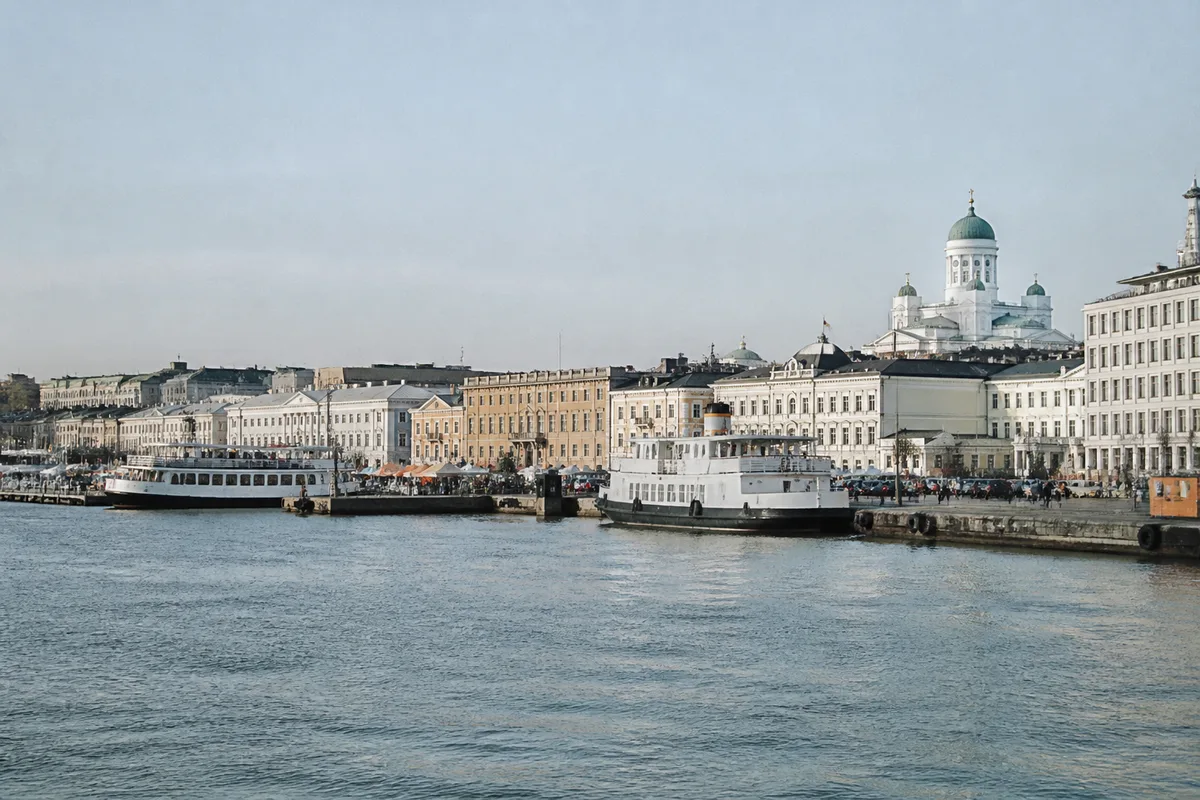
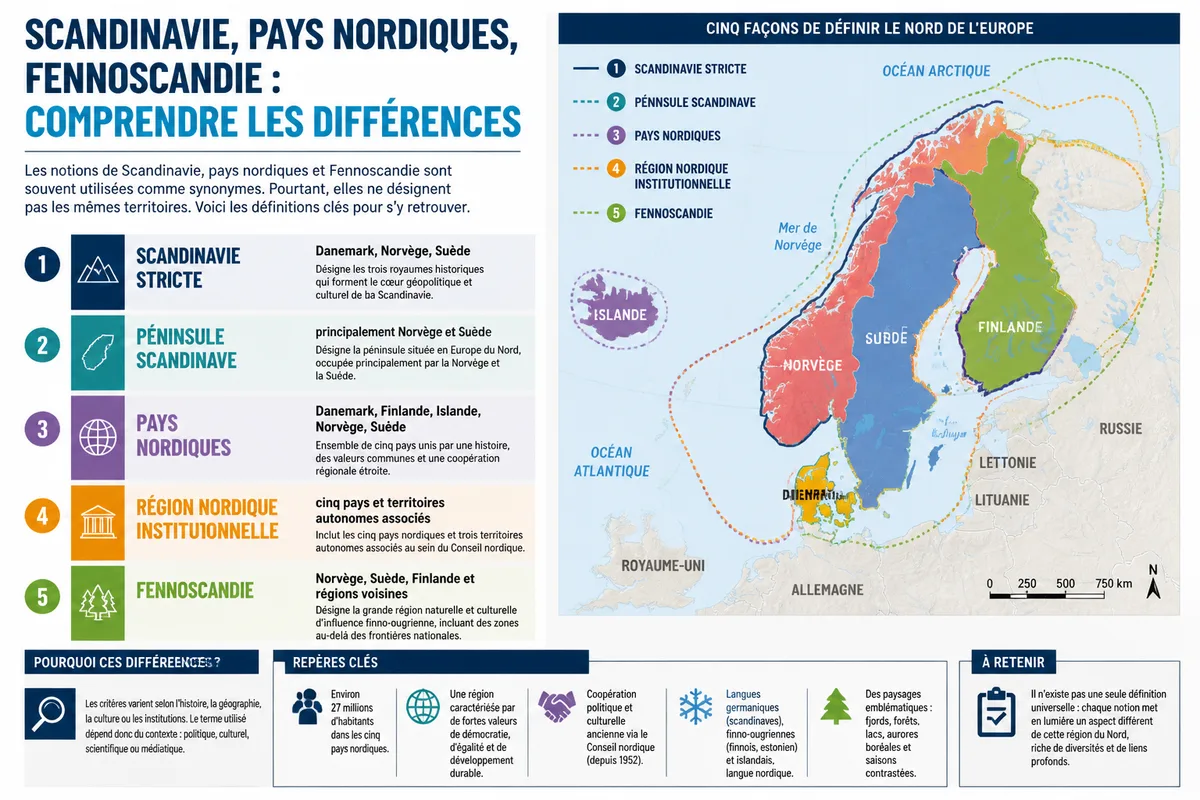
Three countries make up Scandinavia in the strict sense: Denmark, Norway, and Sweden. Scandinavian countries and Nordic countries therefore do not refer to exactly the same group, since the Nordic countries generally include Finland and Iceland. The confusion mainly arises from tourist, geographical, and institutional uses, which sometimes broaden the boundaries of the term.

To understand the difference, one must separate four concepts: cultural Scandinavia, the Scandinavian Peninsula, the Nordic group, and Fennoscandia. Denmark belongs to historical Scandinavia without being on the Scandinavian Peninsula, while Finland and Iceland are Nordic without being Scandinavian in the strict sense.

| 🧭 | Strict Scandinavia: Denmark, Norway, and Sweden. |
| 🌍 | Nordic countries: Denmark, Finland, Iceland, Norway, and Sweden. |
| 🏔️ | Scandinavian Peninsula: mainly Norway and Sweden. |
| 🗺️ | Fennoscandia: Scandinavian Peninsula, Finland, Karelia, and the Kola Peninsula. |
| 🗣️ | Linguistic criterion: Scandinavian languages belong to the North Germanic group. |
| 🤝 | Nordic cooperation: it also includes Greenland, the Faroe Islands, and the Åland Islands as autonomous territories. |
Which countries are strictly considered Scandinavian?
Scandinavia in the strict sense includes Denmark, Norway, and Sweden. This definition is based on particularly strong historical, cultural, and linguistic ties, rather than solely on geographical location. In everyday language, this list of three countries remains the most precise way to refer to the Scandinavian countries. This definition distinguishes the Scandinavian countries from the other Nordic countries.

The three countries generally considered Scandinavian
Denmark, Norway, and Sweden form the classic core of Scandinavia. Their main national languages belong to the North Germanic language group, although mutual understanding varies depending on speakers, accents, and familiarity levels.

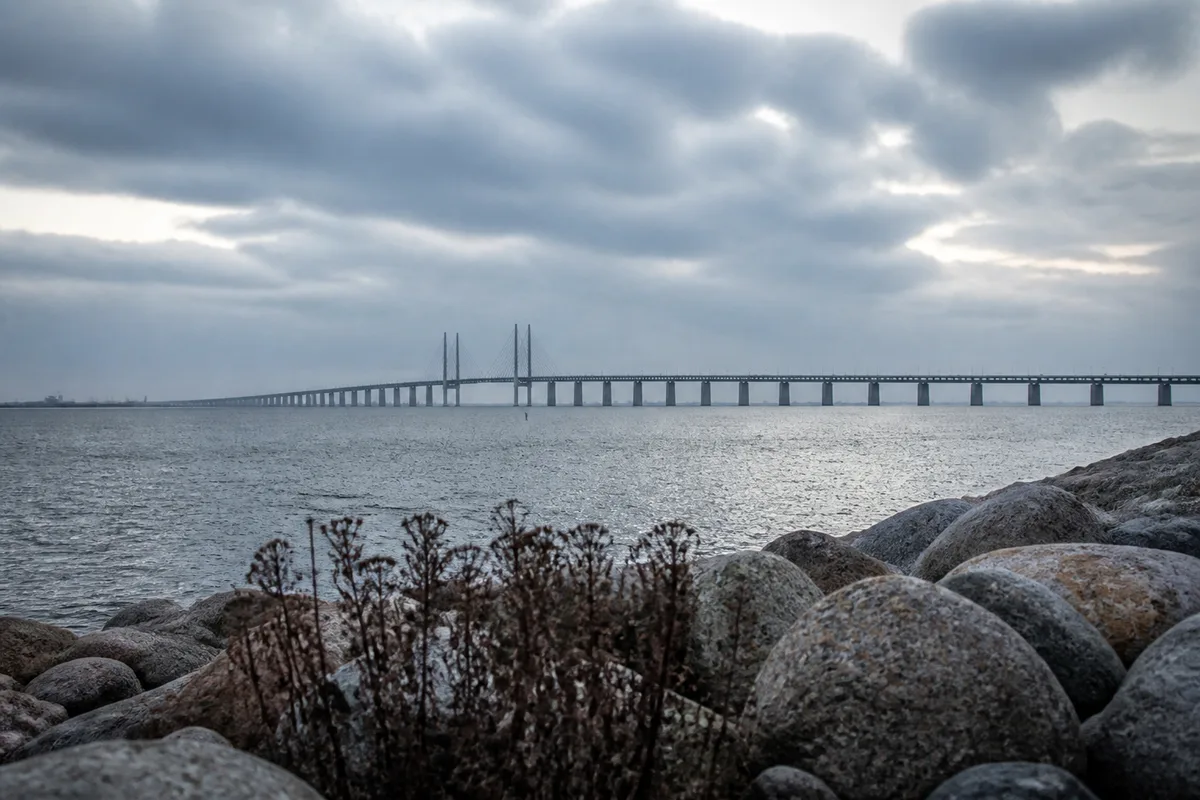
Denmark is the case that most often surprises. The country is not located on the Scandinavian peninsula, which mainly corresponds to Norway and Sweden, but its political history and linguistic ties connect it to the Scandinavian group.
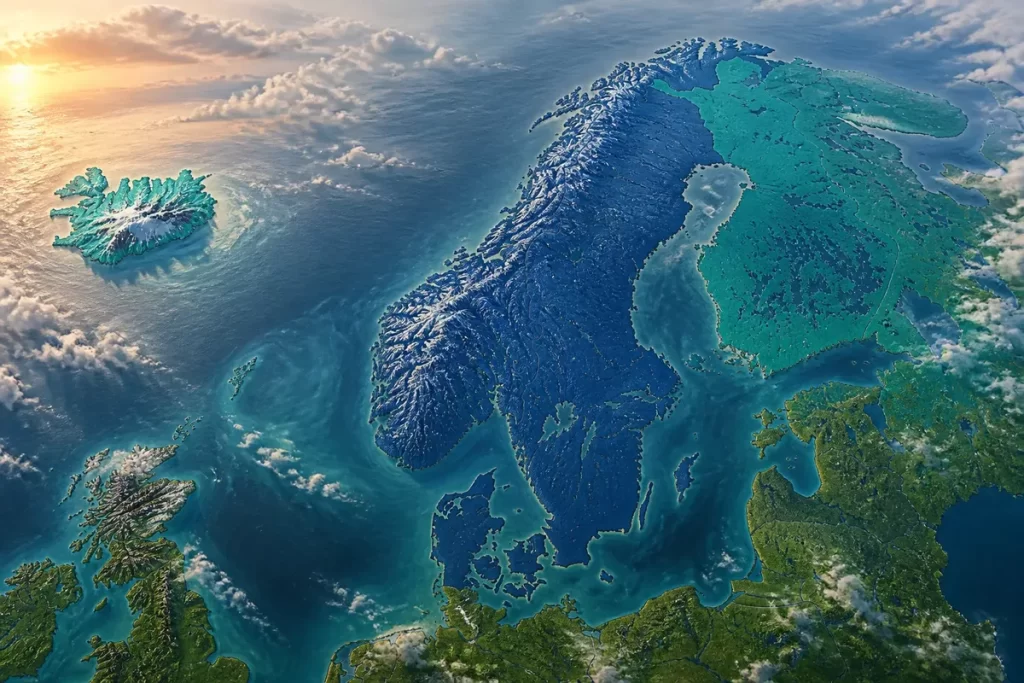
To locate the capitals, borders, and distances between these three countries, a map of the Scandinavian countries is more useful than a simple list: Denmark is separated from the peninsula by the Danish straits, while Norway and Sweden share a long land border.
Cultural Scandinavia and the Scandinavian peninsula
The Scandinavian peninsula is a physical reality. It mainly concerns Norway and Sweden, with a small part of northwestern Finland depending on the geographical boundaries considered. Cultural Scandinavia has a broader scope, as it also includes Denmark.
This distinction explains a common mistake: believing that the word Scandinavia refers only to a peninsula. In physical geography, this idea is defensible. In history and culture, it becomes too narrow.
The Scandinavian mountain range runs along the Norwegian and Swedish border, while Denmark belongs to a more southern and largely insular or peninsular area. Therefore, the terrain alone is not enough to define the regional identity used in European languages.
Which countries are Nordic?
The Nordic countries generally include five states: Denmark, Finland, Iceland, Norway, and Sweden. This regional group is broader than Scandinavia because it is based on historical, political, and cultural proximity that goes beyond just the Scandinavian languages.
The reference list is as follows:
The term Nordic thus functions as an encompassing set. All Scandinavian countries are Nordic, while Finland and Iceland broaden the group without fitting into the strict definition of Scandinavia.

The Nordic institutional scope
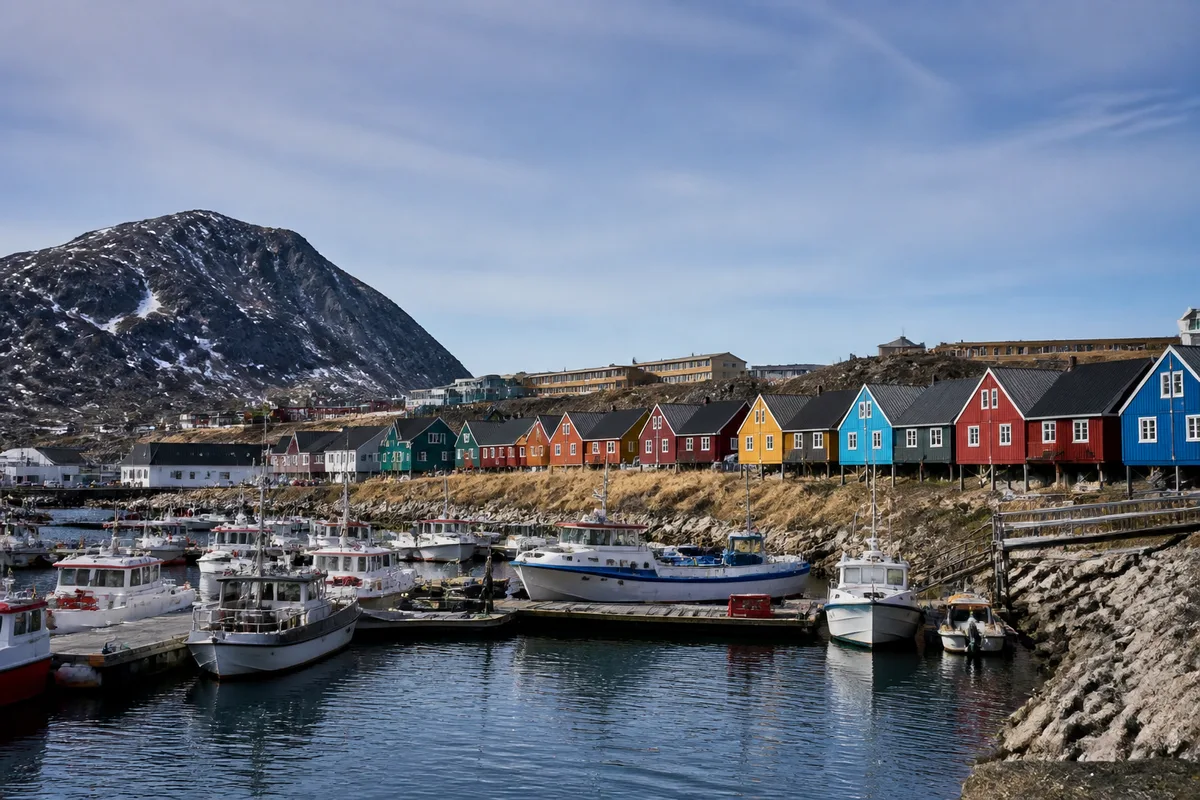
In Nordic cooperation, the group is not limited to the five sovereign states. Greenland, the Faroe Islands, and the Åland Islands are associated as autonomous territories, with their own competencies and institutional ties.
These territories do not become additional sovereign countries. Their presence in Nordic cooperation reflects a political mechanism: autonomous territories participate in a common regional space through their relations with Denmark or Finland.
The reader must therefore distinguish between a list of countries and an institutional scope. In a document devoted to states, five countries suffice. In a document devoted to Nordic cooperation, the associated territories must be mentioned separately.
An example shows why lists may differ: for its Nordic tourism market in 2026, Atout France includes Denmark, Sweden, Norway, and Finland, a scope of four countries representing nearly 28 million inhabitants according to its presentation. This commercial selection does not replace the general definition of the five Nordic countries.
What is the difference between Scandinavian countries and Nordic countries?
| Concept | Countries or territories concerned | Main criterion |
|---|---|---|
| Strict Scandinavia | Denmark, Norway, Sweden | History, culture, and North Germanic languages |
| Scandinavian Peninsula | Mainly Norway and Sweden | Physical geography |
| Nordic countries | Denmark, Finland, Iceland, Norway, Sweden | Political, historical, and cultural region |
| Nordic institutional region | Five countries and associated autonomous territories | Regional cooperation |
| Fennoscandia | Norway, Sweden, Finland, and neighboring regions | Geography and geology |
On the other hand, using “Scandinavian countries” to automatically designate the five Nordic countries remains imprecise in a geographical or linguistic text. In a tourist brochure, the broader usage is understandable but should be announced.
For a general presentation of landscapes, capitals, and regional particularities, the article dedicated to Scandinavian countries to discover can complement this terminological distinction.
Why are Finland and Iceland generally not considered Scandinavian?
Finland and Iceland are generally classified among the Nordic countries, not among the Scandinavian countries in the strict sense. Finland is mainly distinguished by its language and regional history, while Iceland shares a Nordic origin with Scandinavia but has developed its own island identity.
Finland: a Nordic country with different languages
Finnish does not belong to the group of North Germanic languages. It belongs to the Finno-Ugric family, like Estonian, which creates a major linguistic difference with Danish, Norwegian, and Swedish.

Finland also has a significant Swedish-speaking minority and maintains close historical ties with Sweden. This proximity explains why some broad usages include it in Scandinavia, particularly in international tourism.


The clearest formulation remains therefore “Finland, a Nordic country.” It avoids mixing a real regional belonging with a narrower linguistic classification.
Iceland: a Nordic history, an island identity
Iceland shares with Norway, Denmark, and Sweden a historical heritage linked to the Nordic world and Old Norse. Its language belongs to the Scandinavian group historically, but its geographical remoteness and political evolution justify its usual classification in the Nordic group rather than in strict Scandinavia.

Some authors, however, speak of an expanded cultural Scandinavia including Iceland. This interpretation is not absurd when it emphasizes language or history, but it becomes misleading if the reader expects the classic list of the three Scandinavian countries.
The best practice is to specify the scope from the first occurrence: strict Scandinavia for three countries, Nordic countries for five, expanded cultural Scandinavia when an author wishes to include Iceland.
Fennoscandia, Northern Europe or Nordic countries: what other concepts to distinguish?
Fennoscandia and Northern Europe are not synonyms for Nordic countries. The first designates a geographical area larger than the Scandinavian Peninsula, while the second constitutes a European region whose boundaries vary according to maps, institutions, and the subject addressed.
Fennoscandia
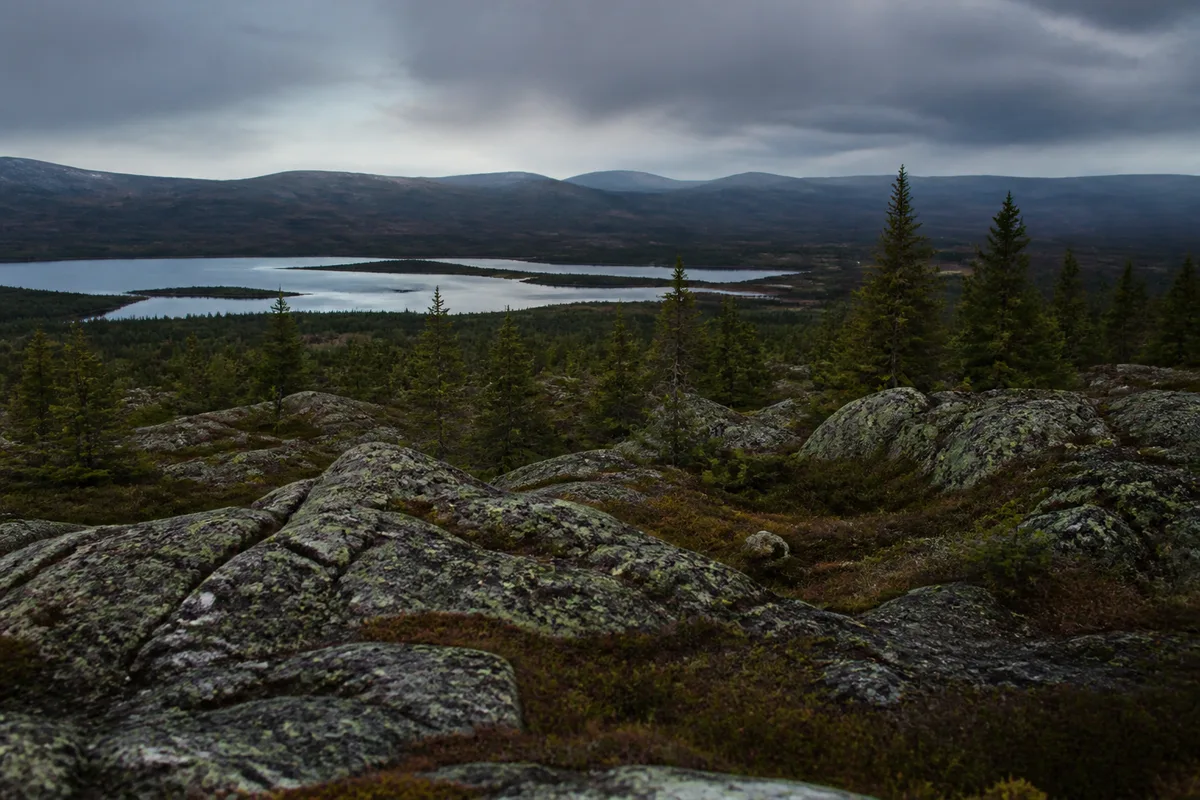
Fennoscandia includes the Scandinavian Peninsula, Finland, Karelia, and the Kola Peninsula. It therefore concerns Norway, Sweden, Finland, and regions located in Russia, without including Denmark in its main geographical scope.
The term is mainly used in physical geography and geology. It describes a set of landforms and ancient bedrocks, not a linguistic community nor a political organization comparable to Nordic cooperation.
The confusion comes from the common prefix and the proximity of the areas represented on maps. Yet, Fennoscandia answers a different geographical question: it does not seek to establish a list of countries sharing a cultural identity.
Northern Europe
Northern Europe is a broader category, frequently used in statistics, maps, or international rankings. It can encompass the Nordic countries, the Baltic States, Ireland, the United Kingdom, or other territories depending on the organization defining the region.
To choose the right term, you therefore need to look at the criterion sought:
- for languages and common history, use Scandinavia;
- for regional cooperation and the five states, use Nordic countries;
- for physical geography including Finland and certain Russian regions, use Fennoscandia;
- for a large European region, use Northern Europe specifying your scope.
In an itinerary, this clarification also avoids unrealistic expectations: a tour announced as “Scandinavia” may include Helsinki or Reykjavik, whereas a strict definition would rather refer to Denmark, Norway, and Sweden.
What history and languages explain these differences?
The current distinction comes from a common heritage that never produced a perfectly uniform political entity. The Scandinavian kingdoms shared dynastic, commercial, and religious ties, while the Nordic area was more broadly built around the Baltic Sea and the North Atlantic.
A common historical heritage
Denmark, Norway, and Sweden were long linked by unions and political rivalries. These relationships fostered the idea of a Scandinavian world, even when the kingdoms’ borders changed.
Finland was closely tied to Sweden for a long time before following a different political path under Russian influence, then building its independent state. Iceland, for its part, maintained a strong historical relationship with Denmark while developing a distinct island society.
Languages as a dividing line
Finnish belongs to a different language family. Icelandic, on the other hand, retains an ancient Nordic lineage, but its insularity has favored a particular evolution and a distinct linguistic identity in contemporary use.
Language thus provides a useful criterion, never a sole boundary. History, politics, and geography can broaden or shift the category depending on the document consulted.
Nordic cooperation
Nordic cooperation institutionalizes a region broader than strict Scandinavia. The Nordic Council, created in 1952, corresponds to inter-parliamentary cooperation, while governmental mechanisms involve the five countries and the associated autonomous territories.
This organization explains why the word Nordic appears in official documents with a broader list than that of cultural Scandinavia. It does not transform Finland or Iceland into Scandinavian countries; it simply confirms their belonging to a common regional space.
On site, a traveler can feel strong continuities between the Nordic countries: wooden architecture, maritime culture, saunas, long winter nights, or importance given to natural spaces. These similarities describe proximity, not a unique national identity.
What mistakes to avoid with Scandinavian and Nordic countries?
Most mistakes come from an unannounced change of definition. To write, prepare an itinerary, or understand a map, announce the chosen perimeter before listing, especially when Finland, Iceland, or autonomous territories appear.
Do not make this confusion.
Which term to choose depending on the context?
| Your need | Recommended term | Limit to signal |
|---|---|---|
| Compare Denmark, Norway, and Sweden | Strict Scandinavia | Finland and Iceland remain outside the classic core |
| Talk about the five states of the region | Nordic countries | Autonomous territories should be treated separately |
| Describe the relief between Norway and Sweden | Scandinavian Peninsula | Denmark is not part of it |
| Include Finland and neighboring Russian regions | Fennoscandia | It is not a political organization |
| Present a broad European region | Northern Europe | The perimeter must be defined |
For a travel article, “Nordic countries” is often the most convenient term when the itinerary includes Helsinki or Reykjavik. For content dedicated to languages, history, or the connections between Copenhagen, Oslo, and Stockholm, “Scandinavia” is more accurate.
Useful sources to consult
Nordic Co-operation → definition of the Nordic region and associated autonomous territories → useful to distinguish the five countries from partner territories → verify that the document indeed refers to the institutional perimeter.
Encyclopaedia Britannica, articles “Scandinavia,” “Scandinavian Peninsula,” and “Fennoscandia” → geographical and cultural definitions of the groups → useful to separate Scandinavia, the Scandinavian Peninsula, and Fennoscandia → do not transpose a physical definition to a cultural usage.
Atout France, Nordic countries market → example of a tourism perimeter of four countries and data published for 2026 → useful to understand why some institutional lists differ → this commercial perimeter does not redefine the general list of Nordic countries.
.magic-lb-overlay{position:fixed;inset:0;background:rgba(15,23,42,.92);display:none;align-items:center;justify-content:center;z-index:99999;cursor:zoom-out;padding:20px}
.magic-lb-overlay.open{display:flex}
.magic-lb-overlay img{max-width:95vw;max-height:95vh;object-fit:contain;border-radius:8px;box-shadow:0 8px 32px rgba(0,0,0,.5)}
.magic-lb-close{position:absolute;top:16px;right:20px;color:#fff;background:rgba(0,0,0,.5);border:none;width:40px;height:40px;border-radius:50%;font-size:24px;cursor:pointer;display:flex;align-items:center;justify-content:center}
.magic-lb-close:hover{background:rgba(0,0,0,.8)}
.wp-block-image img{cursor:zoom-in;transition:transform .15s ease}
.wp-block-image img:hover{transform:scale(1.01)}
.magic-img-link{display:inline-block;text-decoration:none}
(function(){
var ov=document.getElementById(‘magic-lb’);if(!ov)return;
var img=ov.querySelector(‘img’),btn=ov.querySelector(‘.magic-lb-close’);
var L={fr:’Fermer’,es:’Cerrar’,en:’Close’,pt:’Fechar’,it:’Chiudi’,de:’Schlie\u00dfen’,nl:’Sluiten’,ca:’Tancar’};
btn.setAttribute(‘aria-label’,L[(document.documentElement.lang||”).slice(0,2).toLowerCase()]||’Close’);
function open(src){img.src=src;ov.classList.add(‘open’);document.body.style.overflow=’hidden’}
function close(){ov.classList.remove(‘open’);img.src=”;document.body.style.overflow=”}
document.addEventListener(‘click’,function(e){
var a=e.target.closest(‘a.magic-img-link’);
if(a){e.preventDefault();open(a.getAttribute(‘href’));return}
var i=e.target.closest(‘.wp-block-image img’);
if(i&&!e.target.closest(‘a’)){e.preventDefault();open(i.currentSrc||i.src)}
});
ov.addEventListener(‘click’,function(e){if(e.target===ov||e.target===btn)close()});
document.addEventListener(‘keydown’,function(e){if(e.key===’Escape’)close()});
})();